Neon vs LED – Energy Use & Character
One of the most common questions we hear is: “But isn’t LED more energy efficient than neon?” Let’s break that down with facts — not just assumptions.
✦ Energy Use: Neon vs LED
| Feature | Real Neon | LED (Strips / Flex) |
|---|---|---|
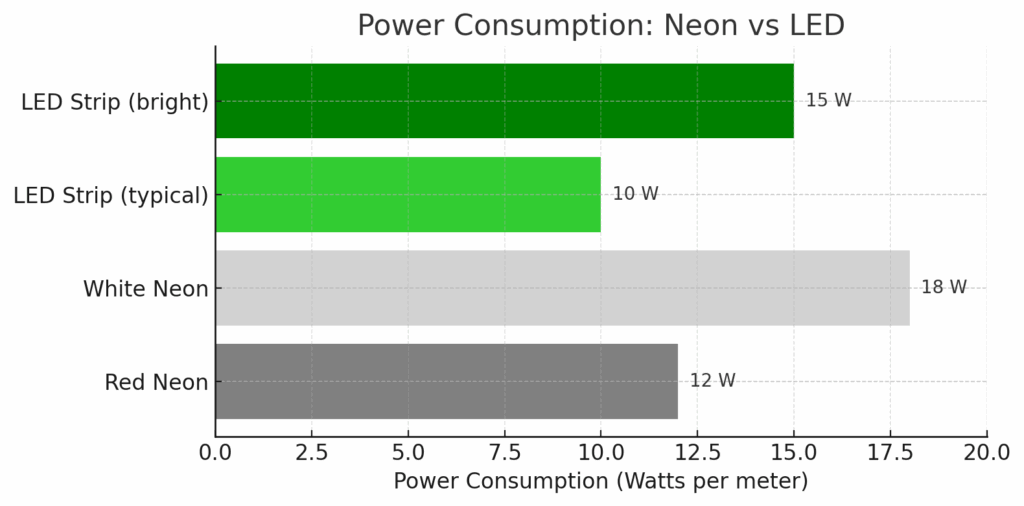
| Power per meter | 15–20 watts (varies by color/diameter) | 5–15 watts (depending on brightness) |
| Visibility | Excellent — visible even in daylight | Can appear dim/faded in sunlight |
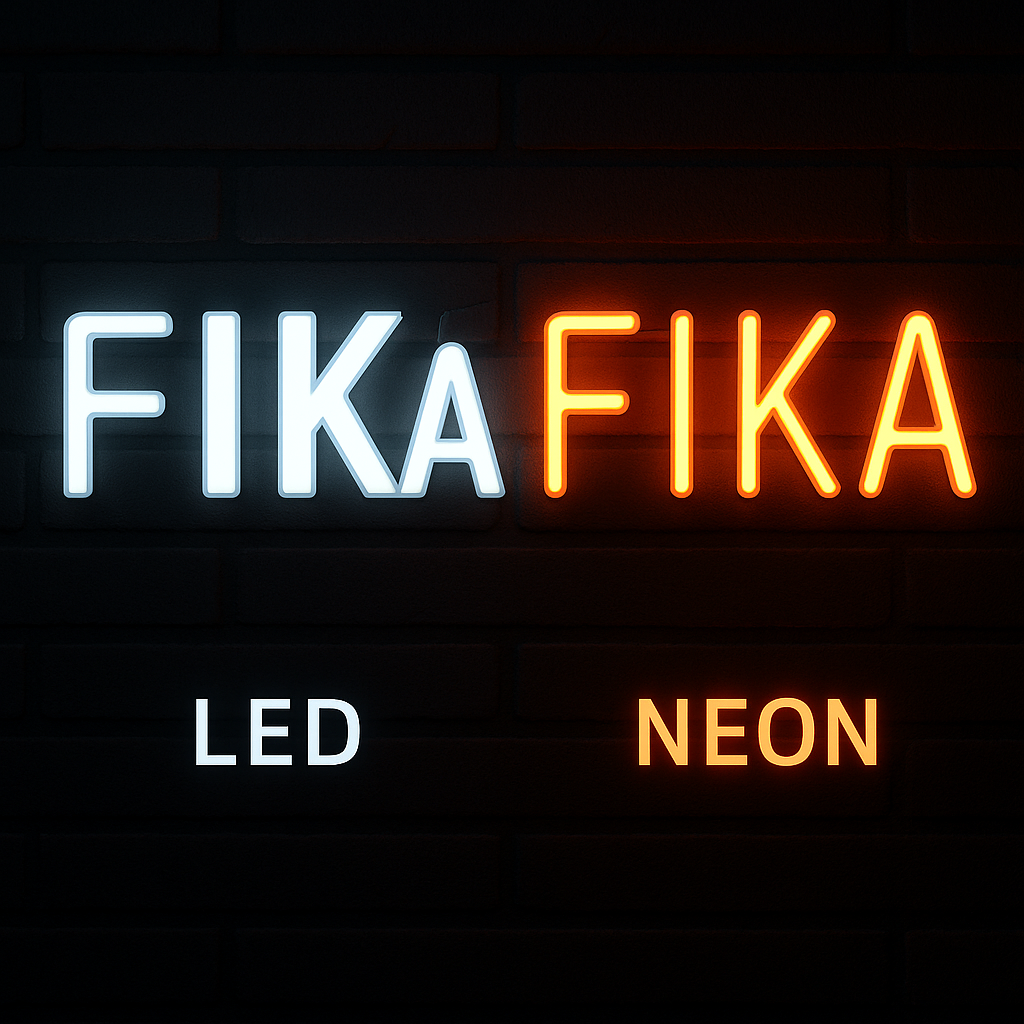
| Light quality | Smooth, glowing, atmospheric | Pixelated or plastic-like |
| Materials | Glass + gas (recyclable) | Plastic + electronics |
Real-world comparison: a white neon sign of 1 meter uses ~18 watts. If it runs 4 hours a day, 365 days a year, that’s about 26 kWh per year — equal to around €7.50 in electricity costs.
So yes, LED can save a few euros a year, but the difference is often minimal.
✦ Color Matters
Red, orange, and pink neon (neon gas, not argon) are especially efficient. These can actually use less power than their LED counterparts. Bright LED setups often require multiple strips, driving up power use and reducing lifespan.
✦ Lifespan & Maintenance
| Aspect | Neon | LED |
|---|---|---|
| Lifespan | 20,000–50,000 hrs (with quality build) | 30,000–50,000 hrs (but may degrade faster) |
| Maintenance | Low, rarely needs repair | LED modules/controllers can fail |
| Repairability | Glass tubes can be fixed locally | Often disposable, not repairable |
Why Neon Still Wins
LED has its place — especially for backlit signs or budget projects. But real neon wins on:
- Craftsmanship: each piece is hand-formed in fire
- Visual impact: fluid glow with no pixelation
- Sustainability: glass and gas, not microplastics
- Timelessness: a vibe that never feels cheap or generic
Neon is not about efficiency alone — it’s about presence. When you want your sign to glow like a work of art, nothing beats the real thing.